
Washer “Fixed” Twice by Someone Else, Still Broken? Here’s Why That Keeps Happening
Here’s Why That Keeps Happening
You paid for the washer to be repaired.
Then it broke again.
Maybe someone replaced a part. Maybe the washer worked for a few days and then stopped draining. Maybe it started shaking again, left clothes soaking wet, or began stopping halfway through a cycle.
If your washer has already been “fixed” twice but the same problem keeps coming back, the issue may not be that the washer needs another replacement part.
The bigger question is:
Was the original problem actually diagnosed?
A washer can show the same symptom for several different reasons. A machine that will not spin, for example, may have an unbalanced load, leveling problem, drain problem, power issue, or a component that needs attention. Whirlpool lists several of these possibilities in its washer troubleshooting guidance.
That is why replacing the part that seems most obvious does not always solve the problem.
For homeowners in Abilene, another failed repair can be especially frustrating when you need clean clothes for work, school, or a busy week.
Here is what may actually be happening.
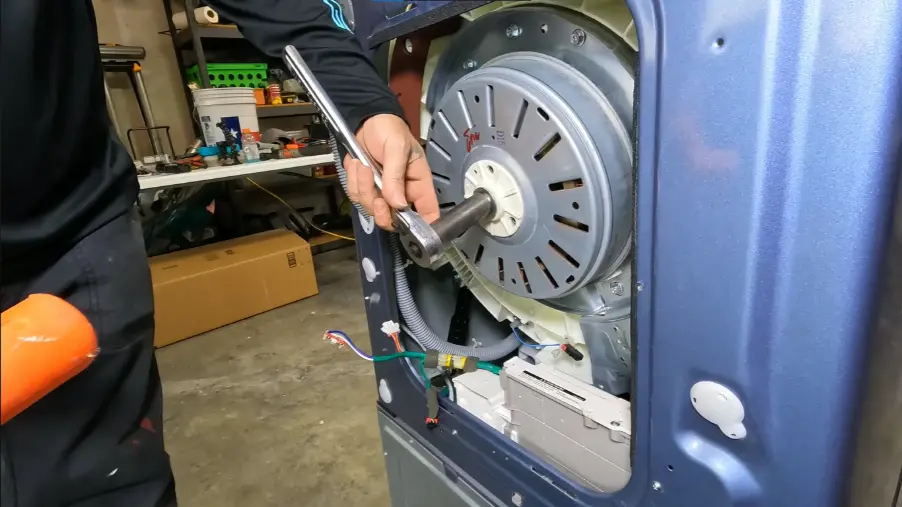
Why does my washer keep breaking after being repaired?
The most common reason is simple:
The symptom was treated, but the underlying cause was not identified.
For example, suppose a washer is not spinning properly.
Someone might immediately suspect the drive system. But the manufacturer troubleshooting information for washers also points to issues such as:
- An unbalanced load
- An overloaded machine
- An unlevel washer
- Drain problems
- Incorrect cycle settings
- A power interruption
- Problems related to the washer’s operating system or components
Whirlpool specifically notes that an unbalanced load can cause vibration, reduced spin speed, longer cycle times, and poor performance.
So replacing a part without checking the other conditions can leave the real problem untouched.
A useful way to look at it
| What you see | What may actually need to be checked |
|---|---|
| Washer will not spin | Load balance, leveling, drainage, controls, drive system |
| Clothes are soaking wet | Drainage, spin speed, load balance, cycle selection |
| Washer shakes badly | Leveling, load distribution, suspension-related components |
| Washer stops mid-cycle | Error codes, balance, controls, water/drain operation |
| Washer leaves water in tub | Drain hose, blockage, pump, controls |
| Washer makes grinding sounds | Mechanical components and foreign objects |
| Washer works sometimes | Intermittent electrical, control, sensor, or mechanical fault |
The symptom gives a technician a starting point. It does not automatically identify the failed part.
What does “fixed” actually mean?
A washer repair should not be judged only by whether the machine starts running again.
A proper repair should address the reported problem and confirm that the appliance operates correctly afterward.
For example, if a washer was not draining, simply getting the machine to run another cycle does not prove the drainage problem is gone.
The washer should be checked through the part of the cycle where the original problem occurred.
If the complaint was:
“It fills but doesn’t drain.”
the important question is not simply:
“Does the washer turn on?”
It is:
“Does it fill, wash, drain, and complete the cycle correctly?”
That difference matters.
Could the same symptom have more than one cause?
Yes.
This is one of the biggest reasons repeat repairs happen.
Example: washer won’t spin
A washer that does not spin could have a problem with the load, leveling, drainage, cycle selection, power, or a mechanical or electronic component.
Whirlpool’s troubleshooting guidance specifically recommends checking whether the washer is out of balance, whether water remains in the tub, whether the machine is level, whether a low- or no-spin setting was selected, and whether there was a power failure.
That means a technician should not automatically conclude:
“It won’t spin, so the spin motor is bad.”
The symptom alone is not enough.
Example: washer shakes violently
The same thing applies to excessive vibration.
A washer can shake because the load is uneven or too large, because the appliance is not level, or because there is another mechanical issue.
Whirlpool explains that an uneven load can cause movement, noise, vibration, reduced spin speed, and longer cycles. It also notes that an unlevel machine can contribute to imbalance.
So if someone replaces a component but never checks the machine’s leveling and loading conditions, the same complaint can return.
Why replacing the same type of part may not solve the problem
Parts do not always fail without a reason.
Sometimes a component fails because it has reached the end of its service life.
But in other situations, another problem may be putting extra stress on that component.
For example, a recurring washer problem may involve:
- Poor drainage
- Excessive vibration
- An unbalanced load
- A blocked hose
- Incorrect installation
- A control or sensor problem
- A separate mechanical failure
This is why a good diagnosis looks at how the washer operates as a system rather than treating one symptom in isolation.
A replacement part may restore operation temporarily while the condition that caused the original problem remains.
What if the washer works for a few days after every repair?
That is an important clue.
If the same problem disappears temporarily and then returns, tell the technician exactly what happened after the previous repair.
Useful information includes:
- What the washer was doing before the first repair
- What part was replaced
- Whether the symptom changed afterward
- How long the washer worked normally
- Whether the same error returned
- Whether the washer behaves differently with small loads
- Whether the problem happens during wash, drain, or spin
- Whether unusual sounds or vibration appeared
This information can make diagnosis much more useful.
Instead of starting from:
“The washer is broken.”
you can provide:
“It was not draining, the pump was replaced, it worked for five days, and now there is water left in the tub again.”
That is a much more specific repair complaint.
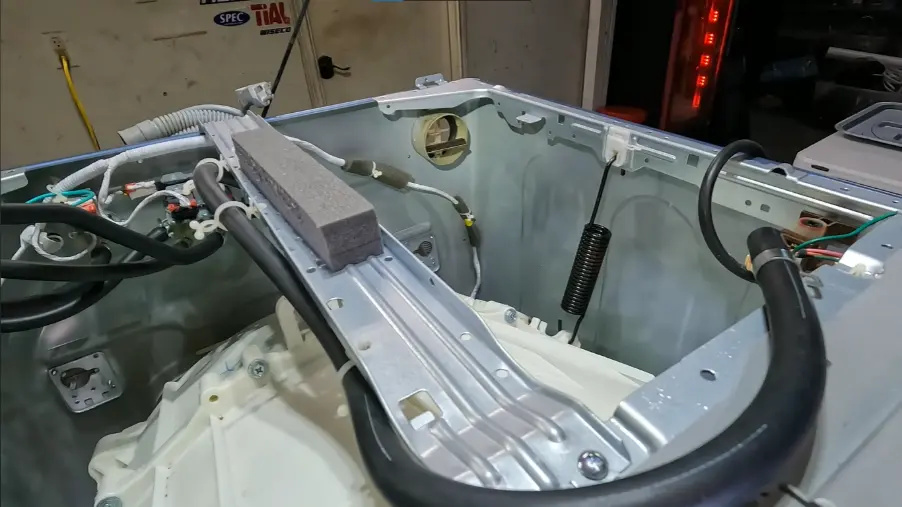
Could the drain hose be the real problem?
It can be.
Drainage problems are not always caused by the pump itself.
Whirlpool’s washer troubleshooting guidance recommends checking the drain hose for kinks or blockages and also gives installation requirements for the drainpipe. Poor drainage can leave water in the tub and can affect the washer’s ability to complete the cycle properly.
That means replacing a drain pump without checking the rest of the drainage path may not solve the problem.
What you may notice
A drainage problem can show up as:
- Water remaining in the tub
- Clothes coming out very wet
- The washer stopping before the cycle finishes
- A drain-related error
- Unusual humming during drainage
- Slow drainage
The exact cause still needs to be determined for the particular washer.
Could an unbalanced load be mistaken for a mechanical failure?
Absolutely.
A washer can shake, slow its spin, or stop spinning when the load becomes badly unbalanced.
This is particularly common with bulky or heavy items.
Whirlpool and Maytag both advise checking load balance, washer leveling, and loading practices when dealing with excessive vibration or poor spinning.
Before assuming a component has failed, try a smaller, evenly distributed load and make sure the washer is properly level.
If the washer continues to shake violently with normal loads, that is a different situation and deserves further inspection.
What if the washer is level but still shakes?
Then the diagnosis should go beyond the floor and leveling legs.
If the machine is correctly leveled and the load is properly distributed but the washer still produces severe vibration, banging, or movement, the technician may need to inspect the washer’s mechanical components.
The exact parts involved depend on whether the machine is a top-loader, front-loader, or another design.
For example, front-load models can have specific suspension and drum-related components, while different washer designs use different systems.
This is another reason generic “replace this part” advice can be unreliable.
What if the washer stops halfway through the cycle?
A washer stopping mid-cycle does not automatically mean the control board has failed.
The first step is to identify where in the cycle it stops.
Does it stop:
- While filling?
- During washing?
- Before draining?
- During draining?
- Before spinning?
- During spinning?
- When it should unlock the door?
The answer can narrow down what needs to be checked.
Whirlpool’s troubleshooting guidance for washers that stop mid-cycle includes checking for flashing indicators or error codes and checking whether the machine is out of balance.
If the washer displays an error code, write it down before turning the appliance off.
That code may provide useful information about the system that detected the problem.
What if the washer makes a new grinding or banging noise?
Do not ignore a new mechanical noise just because the washer still completes a cycle.
Some sounds are normal. Whirlpool and Maytag both note that certain clicking, humming, and operating sounds can occur during normal cycles. But unusually loud grinding, metal-on-metal sounds, or severe banging are different.
Pay attention to when the sound happens.
| When the sound happens | What to note |
|---|---|
| Filling | Does it happen only while water enters? |
| Agitation/washing | Does the basket move normally? |
| Draining | Is there a humming or grinding sound? |
| Spin | Does vibration increase with speed? |
| Door locking | Does the noise occur only at the start? |
| Every cycle | Does the noise happen regardless of load? |
The timing of the noise can be more useful than simply describing it as “loud.”
What should you tell the next technician?
If someone has already worked on the washer twice, bring the repair history with you.
You do not need a long report.
Tell the technician:
1. What was wrong originally.
Example:
“The washer was leaving water in the tub.”
2. What was repaired.
Example:
“The drain pump was replaced.”
3. What happened afterward.
Example:
“It worked for about a week.”
4. What it is doing now.
Example:
“It fills normally but leaves water after the final cycle.”
That information helps the technician investigate whether the current failure is connected to the earlier repair or is a separate problem.
Should you keep replacing parts until the washer works?
No.
Repeated parts replacement without a clear diagnosis can become expensive quickly.
It can also make the situation harder to understand because multiple components may have been replaced without establishing what originally caused the symptom.
A better approach is:
Symptom → diagnosis → test → repair → verify
rather than:
Symptom → guess → replace part → hope it works
That distinction is especially important when an appliance has already been repaired more than once.
What can Abilene homeowners check themselves?
There are a few basic checks that are reasonable before scheduling service.
Check the load
If the washer is overloaded or the clothes are heavily concentrated on one side, redistribute the load.
Check the level
The washer should sit level and securely on the floor. Whirlpool specifically identifies leveling as an important factor in vibration and spin problems.
Check the drain hose
Look for obvious kinks or restrictions.
Do not dismantle components unless you know the appliance and the manufacturer’s instructions.
Check for an error code
If the display shows an error, record it.
Notice when the problem happens
A washer that fails only during spin gives a different diagnostic clue than one that never fills with water.
Check whether the problem happens with every load
If it only happens with one large comforter but not with normal clothing loads, tell the technician.
Why does this matter in Abilene?
A washer problem does not become a different mechanical problem simply because the appliance is in Abilene.
But local homeowners still face the same practical issue as anyone else: when a washer fails repeatedly, the cost is not limited to the repair.
You may be dealing with:
- Another service visit
- More time without a working washer
- Additional parts
- Wet laundry sitting in the machine
- Missed work or schedule changes
- The risk of paying for the same symptom again
That is why the goal should be to identify the actual cause before another repair is recommended.
If your washer is in an Abilene home and has already been worked on twice, give the technician the full repair history rather than starting over with only the current symptom.
When should you stop trying simple fixes?
A basic load adjustment or leveling check makes sense for certain symptoms.
But professional diagnosis is more appropriate when:
- The same problem keeps returning.
- A previous repair did not last.
- The washer leaks.
- Water remains in the tub.
- The washer repeatedly stops mid-cycle.
- The machine makes loud grinding or banging sounds.
- The washer trips a breaker.
- The washer will not start.
- The drum or basket does not operate correctly.
- The appliance works only intermittently.
- Multiple parts have already been replaced.
At that point, another guess can simply add to the repair bill.
What if the washer is old?
Age matters when deciding whether a repair makes financial sense, but age alone does not identify the fault.
A relatively simple repair may still make sense on an older washer.
On the other hand, if an older machine has several major problems, the cost of continued repairs may be harder to justify.
That decision should be based on the washer’s condition, the actual repair required, the cost, and the expected usefulness of the appliance afterward.
A technician should explain the repair before you decide whether to proceed.
Frequently Asked Questions
Why does my washer keep breaking after being repaired?
The same symptom can have several possible causes. If the first repair addressed only one suspected component without identifying the underlying problem, the original symptom may return.
Why is my washer not spinning after it was repaired?
Check whether the load is balanced, whether the washer is level, whether water remains in the tub, whether the selected cycle uses a low or no-spin setting, and whether there was a power interruption. Manufacturer troubleshooting guidance recommends checking these factors before assuming a specific component has failed.
Why does my washer keep shaking after repair?
An unbalanced load or an unlevel washer can cause vibration and reduced spin performance. If the washer is properly loaded and level but continues to shake severely, further diagnosis may be needed.
Why does my washer still have water in it after the pump was replaced?
The pump may not be the only possible cause. The drain hose, drain path, installation, controls, or another component may need to be checked. Whirlpool recommends checking the drain hose for kinks or blockages when a washer does not drain properly.
Should I replace another part if the washer breaks again?
Not until the current problem has been properly diagnosed. The same symptom can come from different causes, so replacing another part based only on the symptom may not solve the problem.
Is it worth repairing a washer that has already been repaired twice?
It can be, depending on the washer’s age, condition, repair cost, and actual fault. Two previous repairs do not automatically mean the machine should be replaced. What matters is what is failing now and whether the repair makes financial sense.
The bottom line
If your washer has been “fixed” twice and is still broken, do not assume it simply needs the same part replaced again.
A washer that will not spin may have a load, leveling, drainage, power, mechanical, or control-related issue. A washer that shakes may have a simple balance problem or a component that needs further inspection. A washer that stops mid-cycle may be reacting to a condition or error that has not been properly identified. Manufacturer troubleshooting information supports checking these different possibilities rather than treating every symptom as one specific failure.
For homeowners in Abilene, We take a diagnosis-first approach to washer problems. We check what the machine is actually doing, explain what we find in plain language, and provide an upfront repair price before starting the work.
If a previous repair did not solve the problem, tell us what was already replaced and what happened afterward. That information can help us focus on the current fault instead of simply repeating the same repair.
If your washer has been repaired twice and is still giving you the same problem, the next step should be diagnosis—not another guess.